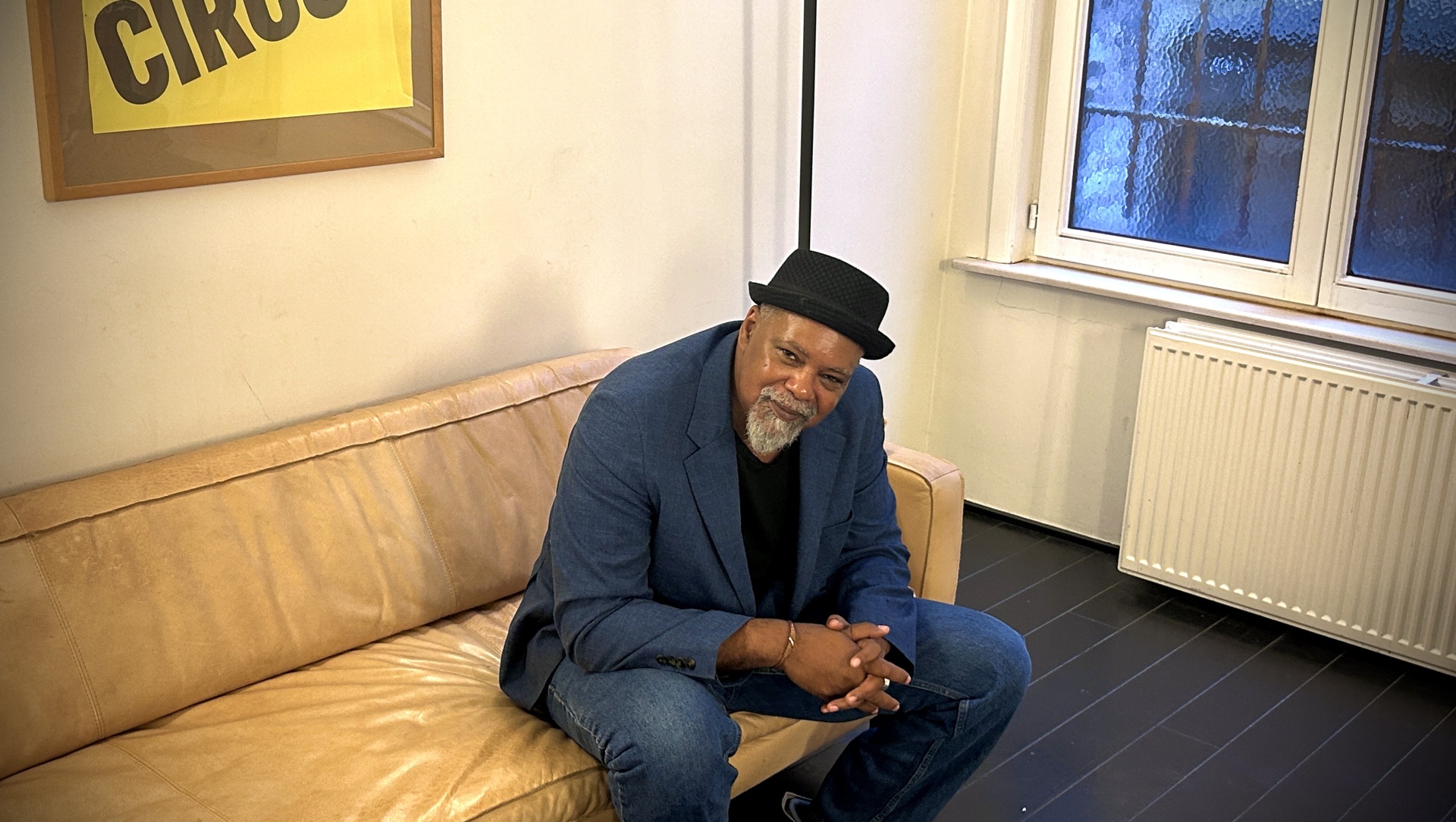
As his four-month residency in Antwerp comes to an end, we sat down with poet, musician, writer and in-house artist in residence Sharrif Simmons to talk about his time here, the people he met, the work he developed and the unexpected connections he discovered between his own family history and Antwerp.
For anyone meeting you for the first time,
who is Sharrif Simmons?
My name is Sharrif Simmons. I am a poet, musician and writer. I am a proud member of the original Last Poets organisation. I'm also a theatre maker, and I'm right now finishing up my residency here. I'm an arts instructor, and I do residencies across the South of the United States and around the globe.
What is one thing you'd like people to know about you?
One thing I would like people to know is that I am a global citizen, and I'm grateful for that. Although I was largely identified as an American artist, I'm actually a member of a global community.
I'd like people to know my background, being raised between America and Ethiopia, and now spending my time in this part of the world, in Europe. We are all part of an incredible vision of the globe, and exchanging cultures is an important part of that.
How would you describe your residency in three words?
Useful, very generous and very productive.
How has it been making Antwerp your home for this period?
Making Antwerp my home has been really illuminating in so many ways. I was able to visit Antwerp, but I was also able to use the space here to be very introspective.
The nature of the residency is to give an artist a true creative space to be thoughtful and introspective, to look inside yourself, have some stillness and have some room to think about what your muse is and what's inspiring you.
What has influenced you most during your time here?
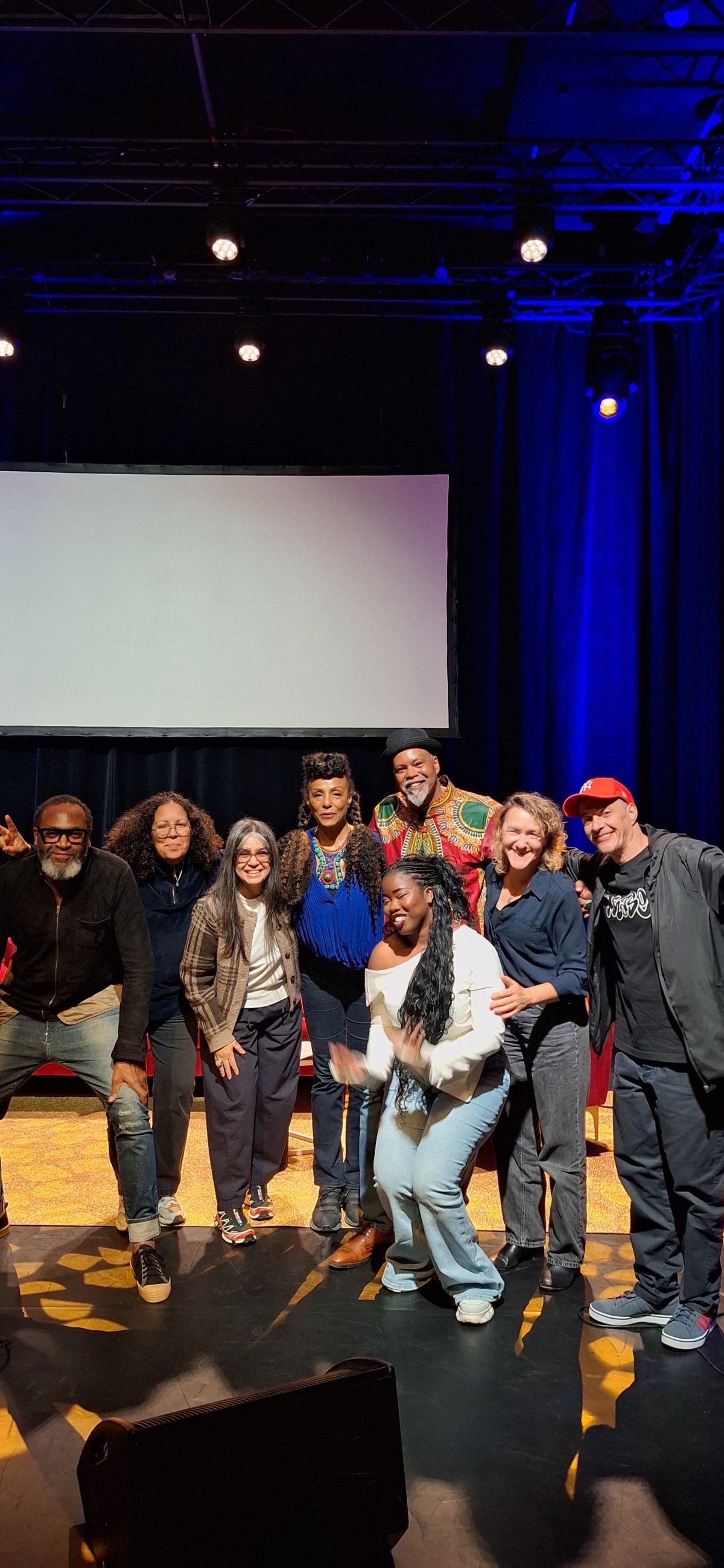
Meeting everyone was, I think, the foundation of it all. Because it's all built on relations and people. How and in which way you feel inspired is, for me, particularly rooted in the nature of my relationships with people.
And the team here have been exceptional. I won't name everyone because I don't want to forget anyone, but the whole crew have been really present and helping me with anything I need.
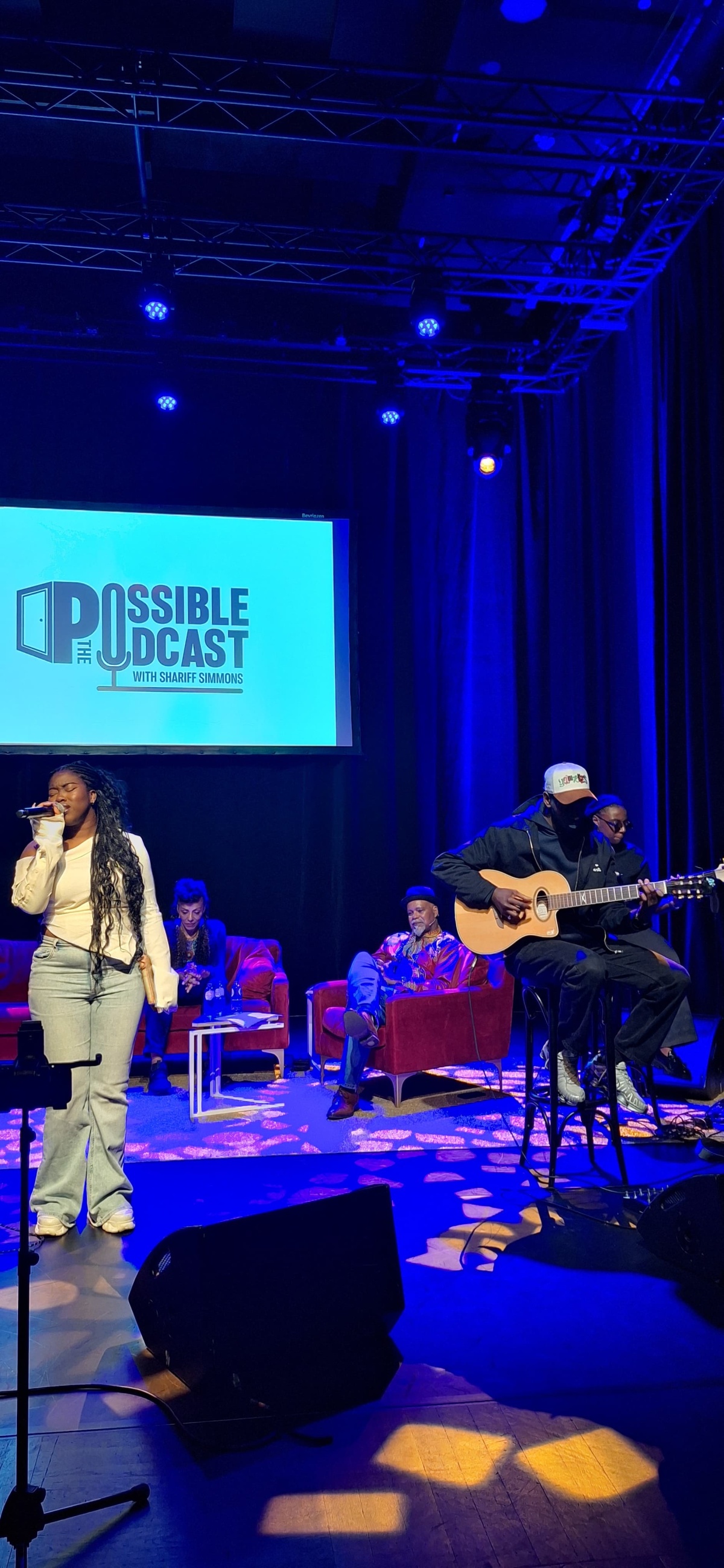
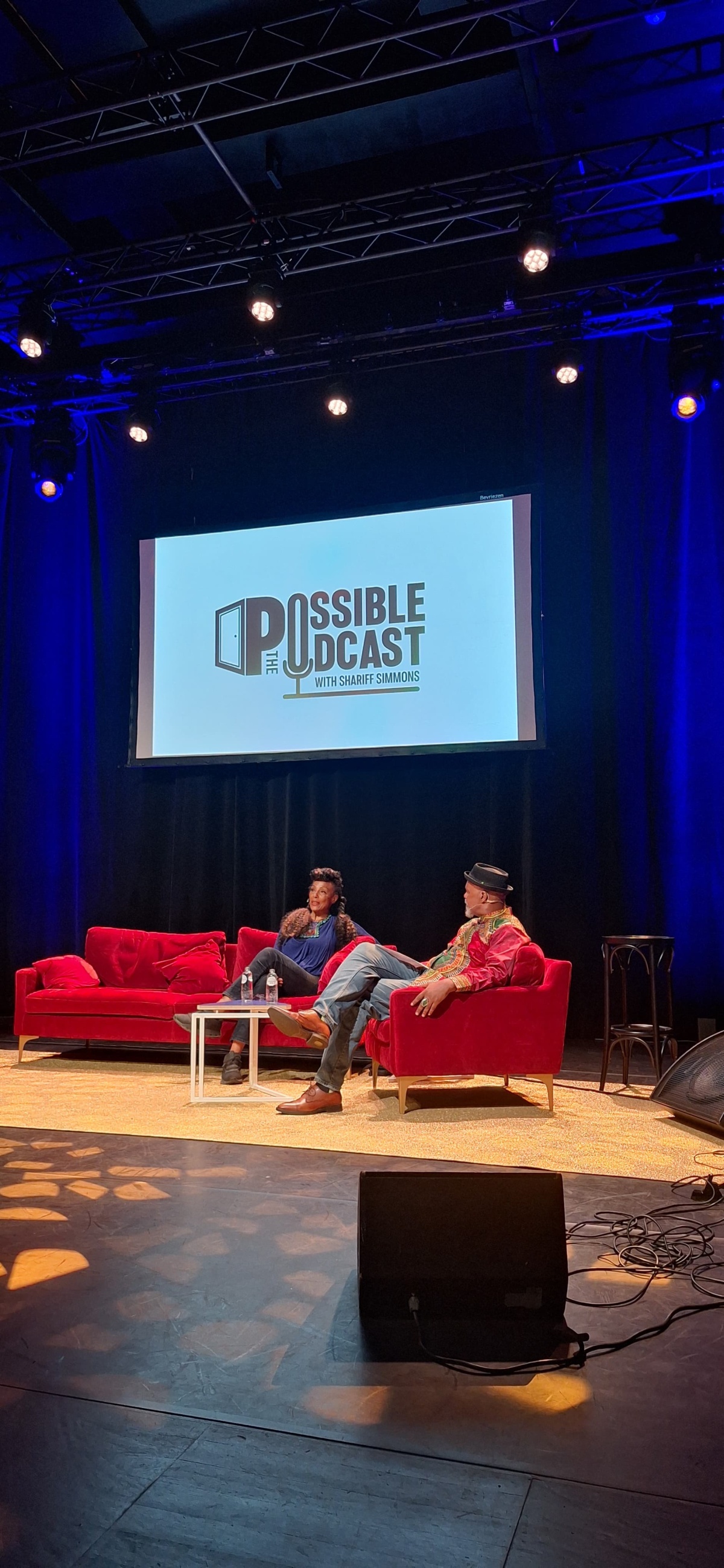
We were able to launch a podcast here that turned into an actual presence in the community. That came from this residency.
What have you been working on during the residency?
I tried to use the minutes and the hours and the days I was given to reach a goal. And that goal was to really help develop the play that I'm working on.
I'm writing a one-man solo show, a theatre piece called All the Times I Died. It's an introspection around immigration, my life in particular, diasporic realities and the fragility of life.
I'm looking forward to developing that over the next couple of years.
You mentioned collaboration as an important part of your residency. What does that look like?
The collaboration between several theatre companies and Podium Mozaïek, coming together with Hip Hop House in Rotterdam and growing this collaboration around my creative processes is a dream come true.
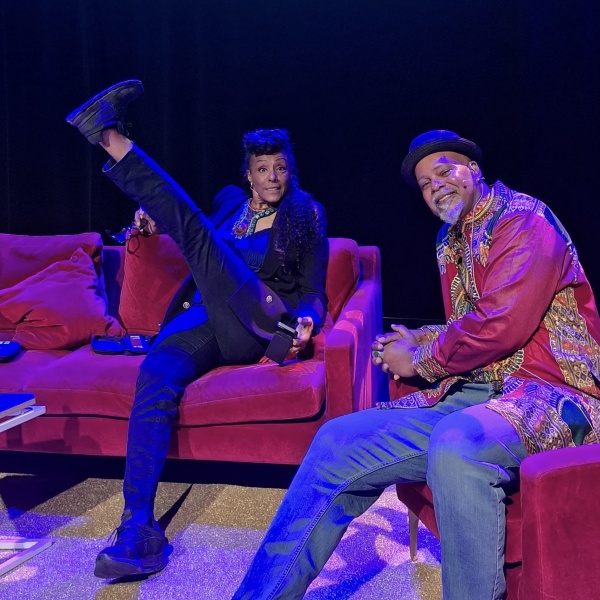
Your residency has also led to a podcast.
How did that come about?
It came from being here and from the relationships we built. The podcast became an actual presence in the community, and that's something I'm really grateful for.
Did Antwerp change anything for you personally?
I know a lot more now than I did before I arrived. I know a lot more about Antwerp, about Belgium, about history.
And I was able to discover my own personal lineage to Antwerp in many ways, indirectly connected to my great-grandfather's history.
My great-grandfather, Captain Hugh Mulzac, was the first Black captain of a merchant ship in the United States. He received his captainship and was able to become a captain, and on that journey he sailed for the Black Star Line, which was Marcus Garvey's vision of a Pan-Africanist movement repatriating Africans from America back to the motherland.
That was inspired by the Red Star Line, which was a European shipping company that shipped people from the ports of Antwerp to America, to New York, Philadelphia and so forth.
So for me to have migrated here, because I'm in the process of moving to this side of the world, it fed my story and grew my motivation to explore further these cycles of human history.
This residency has helped me really reflect on a lot of those aspects of my life and also on the history of the world, to be honest.
If these walls could talk, what would they say about you?
That I eat a lot of bread. That was the foundation. I can subsist on bread and cheese. That's just a fact.
But also, you would see an artist who used his time here, this generous space that's given to me, as resourcefully as possible. I tried to use the minutes and the hours and the days I was given to reach a goal.
Solo sessions or collaborations?
Collaborations.
Inspiration or discipline?
Discipline is the foundation of inspiration.
Early bird or night owl?
Early bird.
Coffee or tea?
Come on. Coffee.
What is one thing you'll miss?
The solitude.
And what's one thing you won't miss?
The solitude.
What's next for you?
I go back to the States after the residency. I have another residency right after this in Birmingham, Alabama, in the South. I'll complete that in arts and medicine.
I do arts education in that way, inspiring people to write and repurpose their stories.
And then when I return, I'll do a series of events, and my album release party will be coming out in early January. The official album will be coming out in June.
So next year is setting up. I'll be doing showcases, and I'll be doing a showcase here as well, out of the work that we're working on.
A lot on the plate.
Finally, what message would you leave with people reading this?
Remember your humanity. Prioritize that.
If I feel like I'm on the front line of anything creatively, it's the celebration of the human effort to be present in a time when there's open dialogue about human erasure and devaluing the human experience and our own contributions to production.
It sounds heavy, but I'd like to encourage everybody to be human first.
And truly enjoy life. I've been so fortunate. I can't wait to share a little bit of this.
I'm just very glad in this stage of life and things. With the way the world is moving, there's still this dramatic sense of optimism that you can have around things.
I think that's a beautiful thing.